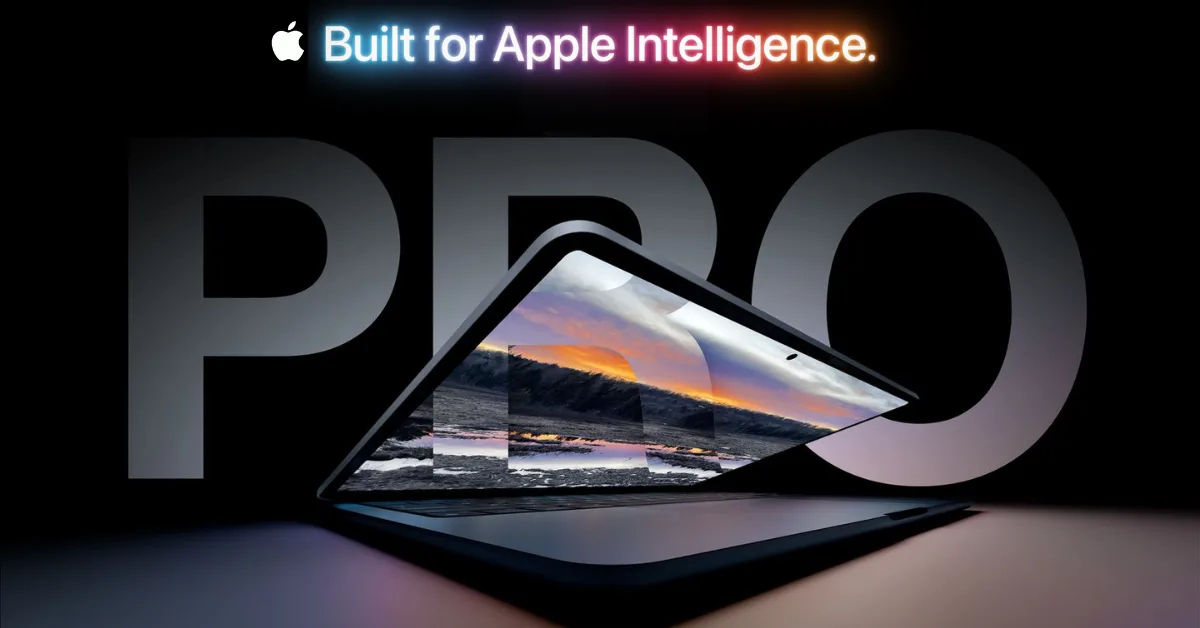
Apple may launch its first MacBook Pro with OLED in late 2026. Here’s everything we know about specs, features, and what this means for users.
According to recent reports from Korean industry sources, Apple is expected to launch its first MacBook Pro models with OLED displays in late 2026. This marks a significant departure from the current mini-LED technology and signals a long-anticipated leap into OLED for Apple’s laptop lineup.
The change is not just cosmetic – it represents a new level of visual fidelity, energy efficiency, and user experience across different user segments.
Why OLED in the MacBook Pro Matters
When compared to traditional LCDs and mini-LEDs, OLED panels deliver notable enhancements in display quality. Unlike mini-LED, which uses backlighting zones, OLED emits light at the individual pixel level. This allows for:
- True blacks and infinite contrast ratios
- More vibrant and accurate colors
- Thinner displays
- Better power efficiency, especially when displaying darker content
- Less eye strain, thanks to reduced blue light and flicker
“A MacBook Pro OLED model isn’t just a visual upgrade — it’s a whole new way of seeing your work, your media, and your device.”
Expected Features of the 2026 MacBook Pro OLED
Based on credible reports and trends in Apple’s product evolution, here is a breakdown of potential specifications and upgrades expected in the 2026 MacBook Pro lineup:
| Feature | Expected Details |
|---|---|
| Display Technology | OLED (Organic Light-Emitting Diode), likely with 120Hz ProMotion refresh rate |
| Available Sizes | 14-inch and 16-inch models |
| Resolution & Color | Enhanced contrast, true black levels, higher brightness, and P3 wide color gamut |
| Processor | Possibly M5 chip or newer Apple Silicon variant |
| Battery Life | Improved efficiency due to OLED’s pixel-level light control |
| Design | Potentially thinner and lighter chassis thanks to OLED panel properties |
| Touchscreen | Still speculative, but more feasible with OLED panel design |
| Release Date | Expected in late 2026, according to recent supply chain insights from Korea. |
Who Will Benefit the Most?
Apple’s MacBook Pro OLED will appeal to a wide range of users across categories. Below are some examples:
| User Category | Benefits of OLED MacBook Pro |
|---|---|
| Creative Professionals | High contrast and color accuracy for photo/video editing, design, and 3D modeling |
| Students | Longer battery life, lightweight design, and vibrant display for study & streaming |
| Business Professionals | Clear visuals for presentations, reduced eye fatigue from long hours of use |
| Software Developers | Dark mode benefits with true black display and energy savings during long coding sessions |
| General Consumers | Better movie-watching, reading, and everyday usage experience |
“From classrooms to boardrooms, the 2026 MacBook Pro OLED could be Apple’s most universally impactful upgrade yet.”
OLED vs. Mini-LED: The Evolution Explained
Apple currently uses mini-LED technology in its premium MacBook Pro models. Here’s how OLED compares:
| Feature | Mini-LED | OLED |
|---|---|---|
| Backlighting | Uses backlit zones | Each pixel emits its own light |
| Black Levels | Very good but not true black | Perfect blacks (each pixel can be turned off) |
| Contrast Ratio | High | Infinite |
| Color Accuracy | Excellent | Exceptional |
| Thickness | Thicker panel due to backlight layer | Thinner display |
| Power Efficiency | Lower with bright content | More efficient with dark content |
Should You Wait for the 2026 MacBook Pro OLED?
Whether or not to wait depends on your needs today. Here’s a quick decision matrix:
| If You… | Consider Waiting? |
|---|---|
| Use your MacBook for creative work | Yes – OLED offers superior visuals |
| Recently bought a MacBook Pro (M2 or M3) | No – Your device is still top-tier |
| Need a laptop urgently | No – 2026 is over a year away |
| Value visual quality and battery life above all | Yes – OLED is a leap forward |
| Want to future-proof for 5+ years | Yes – 2026 models will be cutting-edge |
“If your workflow depends on color accuracy, battery longevity, or simply stunning visuals — OLED is worth the wait.”
Final Thoughts
Apple’s move to OLED for the MacBook Pro isn’t just a display enhancement – it signals a focus on premium quality, improved efficiency, and a more immersive user experience.
As 2026 approaches, expect more detailed leaks and official confirmations from Apple. Until then, users and tech enthusiasts alike can look forward to what could be the most visually stunning MacBook Pro ever made.
“The future of MacBook is OLED — and it’s coming sooner than you think.”
FAQs
1. MacBook Pro OLED launch Date?
Apple is rumored to launch its first MacBook Pro OLED models in late 2026, based on supply chain reports from Korea.
2. What is the difference between OLED and mini-LED in MacBook Pro?
OLED displays offer perfect blacks, higher contrast, and thinner panels compared to mini-LED, which uses backlighting zones. OLED also improves power efficiency and color depth.
3. Will the 2026 MacBook Pro have better battery life?
Yes, the MacBook OLED is expected to deliver longer battery life, especially during dark-mode use, thanks to OLED’s efficient pixel-level lighting.
4. Is it worth waiting for the OLED MacBook Pro?
If you’re focused on display quality, battery life, or visual work, waiting for the 2026 MacBook Pro OLED may be a smart choice. Otherwise, current models like the M3 MacBook Pro are still excellent.
5. Will Apple introduce new features with the OLED MacBook Pro?
Besides OLED, the 2026 MacBook Pro may feature a next-gen Apple Silicon chip (possibly M5), thinner design, and potentially other new display enhancements.
Related Reads from tnapp You’ll Love:
Don’t forget to explore other trending updates on our site:
Oppo Reno 14 Pro 5G Price Tipped | Oppo Reno 14 FS 5G Full Specs Leaked Ahead of Launch
Moto G86 Power 5G Launched in India with 6,720mAh Battery, 50MP Camera & Snapdragon 695 at ₹17,999
OpenAI GPT OSS 20B and 120B: Open-Weight Breakthrough or Just Marketing Spin?